Why Your Toilet Keeps Running and What Actually Fixes It
Most running toilets come down to one of two cheap parts, but a few point to something that needs a closer look.
October 19, 2026 · 4 min read
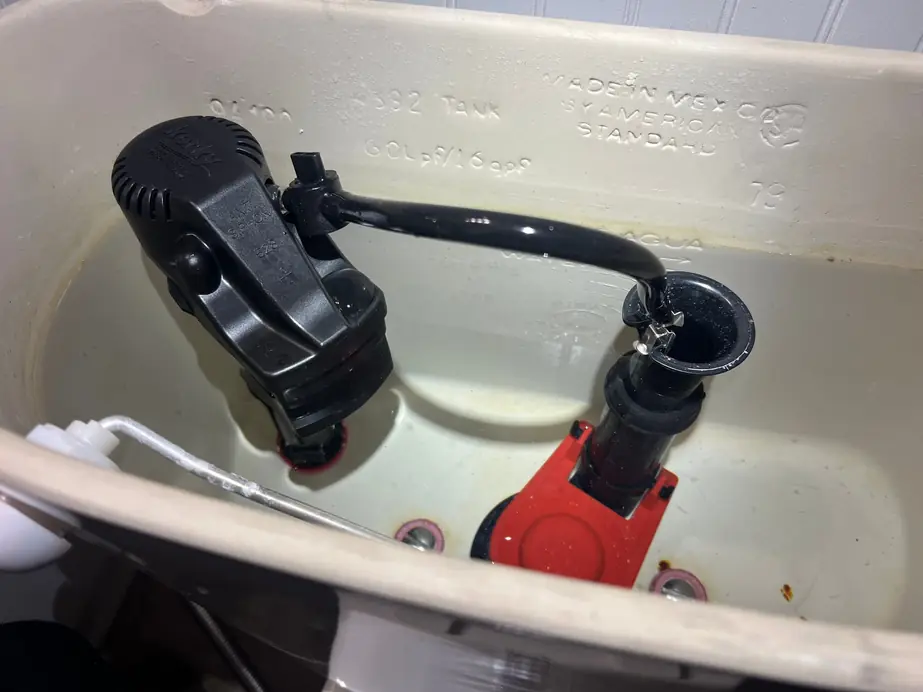
That trickling sound from the bathroom at two in the morning is a toilet that can't make up its mind. It fills, it stops, it fills again. Sometimes it never stops at all. A running toilet is one of the most common household repairs, and in most cases the fix is small. Understanding what's going on inside the tank helps you tell the easy cases from the ones that need a closer look.
What happens inside the tank
Open the lid and look. Two main parts do all the work. The flapper is the rubber seal at the bottom of the tank that lifts when you flush and drops back to hold the water in. The fill valve is the tall assembly, usually on the left, that refills the tank after a flush and shuts off when the water reaches the right level. There's also an overflow tube, a vertical pipe that acts as a safety drain if the water ever climbs too high.
When the tank is full, the flapper should be sealed and the fill valve should be closed. If water keeps moving, one of those two isn't doing its job.
Telling a flapper problem from a fill valve problem
A simple test sorts it out. Drop a few drops of food coloring into the tank and don't flush. Wait fifteen to twenty minutes. If color shows up in the bowl, water is leaking past the flapper. That's the most common cause, and the part is inexpensive and easy to replace.
If the bowl stays clear but you still hear water running, look at the water level. If it's creeping up to the top of the overflow tube and spilling in, the fill valve isn't shutting off. Either the float is set too high, the valve is worn out, or grit has gotten into it.
- Hissing or trickling with the tank full usually means the fill valve
- A toilet that refills every so often on its own, called ghost flushing, usually means a leaking flapper
- A handle that has to be jiggled to stop the water often points to a stuck flapper chain or a worn flapper
- Water spilling down the overflow tube means the fill valve or float needs adjusting or replacing
What a flapper swap involves
This is a ten-minute job when everything cooperates. Shut off the water at the supply valve behind the toilet, flush to drain the tank, and unhook the old flapper from its pegs and the chain. Press the new one on, hook the chain with just a little slack, and turn the water back on. Too much slack in the chain can let it tangle under the flapper, and too little keeps the flapper from sealing.
Flappers come in different shapes and sizes, which is why it helps to bring the old one to the store or snap a photo of the tank. A flapper that almost fits will almost work, and that's how people end up with a toilet that still runs.
What a fill valve replacement involves
A fill valve swap is a bit more involved but still well within normal handyman work. The water is shut off and the tank drained. The supply line is disconnected from the bottom of the tank, the locknut under the tank is loosened, and the old valve lifts out. The new valve goes in at the correct height, gets snugged down without overtightening, and the supply line is reconnected. Then the float is adjusted so the water stops a little below the top of the overflow tube.
Overtightening is the classic mistake. Tank hardware is porcelain, and a cracked tank turns a thirty-minute repair into a full toilet replacement. A steady hand and a light touch matter more than muscle here.
When it's more than a part
Sometimes a new flapper doesn't solve it because the surface it sits on is worn, pitted, or crusted with mineral buildup. A gentle cleaning can help. If the seat is damaged, the better fix may be a different style of flush valve, or in some cases a new toilet.
Other signs point beyond the tank. Water around the base of the toilet can mean a failed wax ring or a leaking supply connection. A wobbly toilet that rocks when you sit may have loose floor bolts or a damaged flange. Dampness on the ceiling below a bathroom deserves attention soon, since slow leaks can soak subfloor without announcing themselves.
If a repair turns out to involve plumbing beyond a fixture swap, or work that needs a licensed plumber or permitting, Robbie brings in a licensed partner instead of guessing. The goal is to fix what's actually wrong.
Don't ignore it
A toilet that runs constantly can waste a lot of water over a month, and that shows up on your water bill. It can also wear out the fill valve even faster, since it never gets to rest. Fixing it early is cheaper than living with it, and the repair rarely gets easier with time.
If you're in Owens Cross Roads, Huntsville, Hampton Cove, or anywhere in North Alabama and your toilet won't quit running, call or text Robbie at 256-804-5442. A quick description and a photo of the inside of the tank is usually enough to get started.
Robert Owens Handyman, 256-804-5442
Call 256-804-5442More articles
How to Build a Punch List That Gets Cleared in One Visit
A little prep on your side turns a scattered pile of small repairs into a single, finished visit.
Grab Bars That Hold: Where to Mount Them and What Matters
The bar itself is the easy part. What's behind the wall decides whether it holds when someone really leans on it.