Grab Bars That Hold: Where to Mount Them and What Matters
The bar itself is the easy part. What's behind the wall decides whether it holds when someone really leans on it.
October 19, 2026 · 4 min read
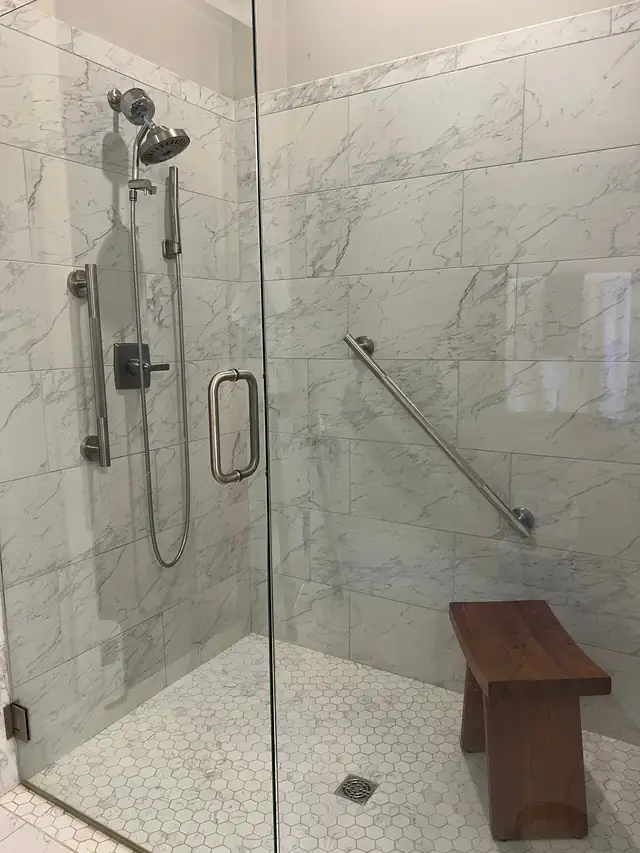
A grab bar is the one piece of bathroom hardware that someone may put their full weight on without warning. A towel bar can pull loose and nobody gets hurt. A grab bar that pulls loose in the shower is a different story. That's why the installation matters far more than the bar you pick, and why a careful, methodical approach is exactly what this job calls for.
Suction cups and drywall anchors are not grab bars
Start with what to avoid. Suction-cup bars can release without warning, especially on textured tile or after soap film builds up. Plain drywall anchors, even heavy-duty ones, rely on thin gypsum board that crumbles under a sudden pull. A towel bar is designed to hold a wet towel, and it's not designed to catch a falling adult.
A real grab bar is fastened into solid framing or into blocking added behind the wall. That's what lets it carry weight in a pull-down or sideways direction, which is how people actually grab.
Find the studs, and check what's behind the tile
In a standard wall, wood studs run vertically at regular spacing. A good stud finder helps, and so does tapping and probing. Mark the stud centers, then confirm them with a small test hole in a spot that will be covered. In a tiled shower, there's usually a layer of tile, setting material, and backer board between you and the framing, so the fasteners need to be long enough to reach solid wood and the drilling needs to avoid cracking tile.
Studs don't always land where you want the bar. A bar that's perfectly positioned for the user but only catches one stud, or none, needs a different plan. Mounting into a single stud with the other end floating is a common cause of bars that feel solid and then work loose.
Where blocking comes in
Blocking is horizontal wood framing installed between studs so there's solid material wherever a bar needs to go. It's easy to add when a wall is open during a remodel. When the wall is already finished, it can sometimes be done by opening a section of drywall, adding the blocking, and patching. In a tiled shower, that may mean a bigger repair, so it's worth planning the bar location before any tile work.
Some wall types, like fiberglass or acrylic surround panels, need special attention. They flex, and fasteners that bite the panel alone won't hold. Whether a bar can be mounted properly depends on what's behind the panel, and sometimes the honest answer is that a different approach is needed.
Placement: shower and toilet
There's no single correct spot for every person. The best placement depends on who's using it, how they move, and where they'd naturally reach. The practical way to find it is to have the person stand or sit in position and note where their hand lands when they need support.
- Shower entry: a vertical or angled bar near the opening gives something to grab while stepping over the tub edge or curb
- Inside the shower: a horizontal bar on the long wall helps with balance while washing, and a short one near the controls helps with turning
- Beside the toilet: a bar on the side wall, or a fold-up style, helps with sitting and standing
- Behind the toilet: sometimes used for a second reach point, if the wall framing allows
Diameter matters too. A bar that's comfortable to wrap a hand around is easier to trust. A slim, smooth bar can be slippery when wet, so many people choose a textured grip.
Fasteners and flange covers
Use the screws that are made for the bar and long enough to bite solid wood, and drive them straight. Pre-drill through tile with the right bit and keep the bit cool to avoid cracks. Seal around the mounting flange so water doesn't get behind it and soak the wall, because moisture in the framing is how a solid mount turns soft over time.
After installation, test it. Put steady, increasing weight on the bar in the directions someone would actually pull. If anything flexes, clicks, or shifts, stop and fix it before anyone relies on it.
Why this work benefits from care
Robbie's background includes explosive-safety work in the Army National Guard, and that shaped a careful, methodical way of doing every job. On a grab bar, that means locating the framing before drilling, checking for pipes and wires in the wall, and verifying the finished mount instead of assuming it's fine. If the wall turns out to hide plumbing or wiring that needs a licensed trade, he brings in a licensed partner.
If you're planning grab bars or other safety hardware in Owens Cross Roads, Huntsville, Hampton Cove, or elsewhere in North Alabama, call or text Robbie at 256-804-5442. Tell him who's using the bar and what the wall is made of, and he'll take it from there.
Robert Owens Handyman, 256-804-5442
Call 256-804-5442More articles
How to Build a Punch List That Gets Cleared in One Visit
A little prep on your side turns a scattered pile of small repairs into a single, finished visit.
Why Your Toilet Keeps Running and What Actually Fixes It
Most running toilets come down to one of two cheap parts, but a few point to something that needs a closer look.