Dishwasher Not Draining? What to Check Before You Call
A few minutes of checking often finds the clog, and when it doesn't, you'll know what to tell the repair person.
October 19, 2026 · 4 min read
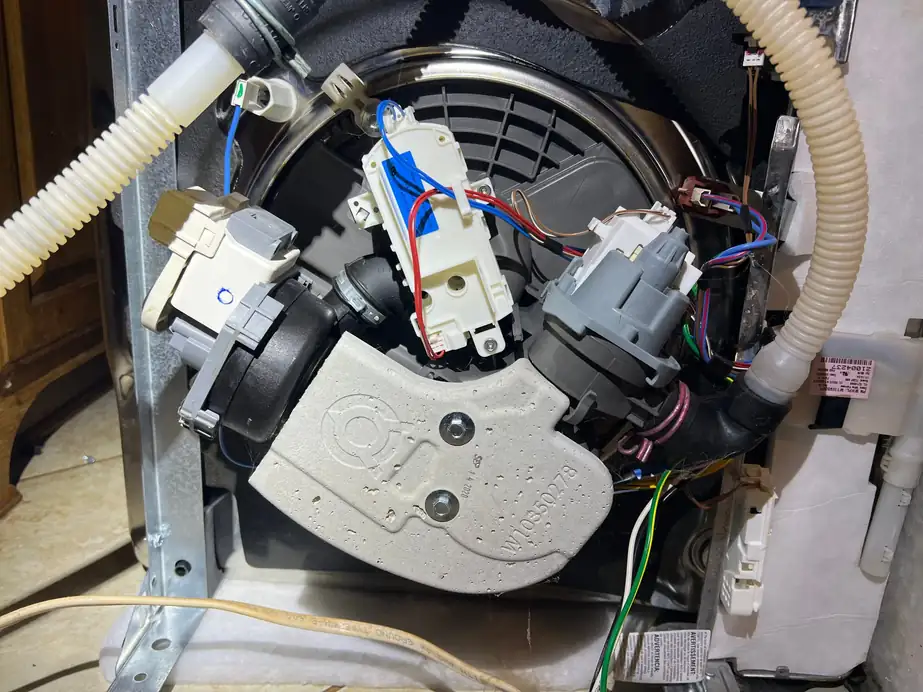
You open the dishwasher after a cycle and find a pool of gray water sitting in the bottom. It's frustrating, and a little gross. The good news is that most draining problems come from a clog or a kink somewhere between the tub and the sink drain, not from a failed machine. Here's a sensible order to check things, starting with the easiest.
Start with the basics
Before taking anything apart, unplug the dishwasher or switch off its breaker. Then scoop out the standing water with a cup and a towel. Check that the cycle actually finished. Some machines pause if the door wasn't latched, and a cycle that was canceled midway will leave water behind. Run a short drain cycle and listen. A humming sound with no water moving points one way, and total silence points another.
Clean the filter and the sump
At the bottom of the tub, most dishwashers have a removable filter, usually a cylinder that twists out, sometimes with a flat mesh screen beneath it. Food, bits of glass, labels, and broken toothpicks collect here. Pull the filter, rinse it under warm water, and wipe out the area under it. Look for anything hard sitting in the sump, since a piece of glass or a seed can jam the pump later.
Check your owner's manual for how your model's filter comes out. Forcing it can crack the housing.
If you have a garbage disposal, check the knockout plug
This is the one that catches people. When a new disposal is installed, there's a small plug inside the dishwasher inlet that has to be knocked out so the dishwasher can drain into it. If that plug was never removed, the dishwasher drains poorly or not at all. It's also possible for food to pack up in that inlet over time.
To check, shut off power to the disposal, disconnect the dishwasher drain hose from the disposal inlet, and look inside. A plug still in place is a quick fix with a screwdriver, and the loose plug piece should be fished out of the disposal. Also run the disposal clear before starting the dishwasher, since a backed-up disposal sends water straight back.
Look at the air gap, high loop, and hose
Some sinks have a small cylinder next to the faucet called an air gap. It sits between the dishwasher hose and the drain and prevents dirty sink water from flowing back into the machine. If it's clogged, the dishwasher can't drain. Lift the cap and clean out the gunk with a small brush.
If there's no air gap, the drain hose should rise high under the countertop and then drop to the drain, forming a loop. That high loop does a similar job. A hose that sags low or runs flat can let water back up.
Slide the dishwasher out only if you can do it without stressing the water line and drain connection, and look at the drain hose. Kinks, crushed spots, and sharp bends all slow the flow. Hoses that were pinched when the machine was pushed back after cleaning or after a remodel are a common culprit. Straighten the hose, and replace it if it's cracked or collapsed.
- Standing water plus a humming pump: look for a clog or a jammed pump impeller
- Standing water and no sound at all: the pump motor or its control may have failed
- Water that drains slowly and gurgles in the sink: look at the disposal, air gap, or the sink drain line
- Foul smell with standing water: food buildup in the filter and sump is likely
What a drain pump repair looks like
If everything upstream is clear and the water still sits there, the drain pump is the next suspect. On many models it can be reached from under the machine or by removing the lower panel and pulling the tub forward. The pump gets inspected for jammed debris in the impeller, which is often the whole problem. If the motor is dead or the impeller is broken, the pump is replaced with the matching part for your model number.
This is where the model and serial numbers from the label inside the door really matter. The wrong pump won't fit, and ordering the right one avoids a second trip. Power and water are shut off first, and connections are photographed before disconnecting so everything goes back the way it came.
When to stop and call someone
Stop if you see water leaking from wiring or the control area, if the breaker keeps tripping, or if the repair would cost more than the machine is worth. A newer machine with a failed control board may not be a good repair candidate. If the drain problem traces back to the household plumbing, not the appliance, a licensed plumber may need to be brought in, and Robbie will tell you so rather than keep working on the wrong thing.
If your dishwasher in Owens Cross Roads, Huntsville, Hampton Cove, or anywhere in North Alabama is still holding water after these checks, call or text Robbie at 256-804-5442 with the brand and model number.
Robert Owens Handyman, 256-804-5442
Call 256-804-5442More articles
How to Build a Punch List That Gets Cleared in One Visit
A little prep on your side turns a scattered pile of small repairs into a single, finished visit.
Why Your Toilet Keeps Running and What Actually Fixes It
Most running toilets come down to one of two cheap parts, but a few point to something that needs a closer look.